
Look at an online casino as a shop rather than a factory and most of it makes more sense. The operator runs the shop front, the account, the cashier and the support desk. Almost nothing on the shelves is its own. The games come from independent development studios that license their catalogues to licensed operators under contract, and that arrangement shapes far more of the player experience than the shop front does.
Why the supply chain is a signal worth reading
Anyone can put a studio logo on a web page. What is considerably harder is getting that studio's games to open, in your account, and settle to your balance. Established developers license their content under commercial terms, require the operator to hold an appropriate licence, and audit how their titles are deployed. A working game is evidence of a relationship; a logo is evidence of an image file.
- Studios contract with operators and can withdraw content.
- Licensing conditions usually require the operator's own regulatory standing.
- Integration is technical work, not a link — a broken one is obvious.
- The lobby's studio filter shows what your account can actually open.
What the major studios are known for
Developers have recognisable house styles — in maths, in feature design and in how their games look and sound. Knowing roughly who does what turns a large unsorted library into something you can navigate deliberately.
| Studio | Best known for |
|---|---|
| Evolution | Live dealer tables and game show formats |
| Pragmatic Play | High-volatility slots and cascading grid mechanics |
| NetEnt | Long-running classic slot brands and clean presentation |
| Play'n GO | Adventure-themed slot series and book-style features |
| Red Tiger | Daily jackpot mechanics layered onto slots |
| Quickspin | Feature-led slots with distinctive art direction |
| Betsoft | Cinematic three-dimensional presentation |
| Microgaming | One of the oldest catalogues in online casino software |
These are characterisations of public reputation, not exhaustive descriptions. Every one of these studios ships outside its stereotype regularly, and the point of the filter is to let you find out where your own preferences sit rather than to take a summary's word for it.








Titles from the lobby
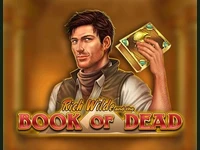
These are games in the library, shown with the studios' own promotional artwork. Each is the certified build the studio distributes, not an operator variant.




How a game gets from a studio into your browser
The path is longer than it looks and every step constrains the next. Nothing in it allows the operator to reach into the maths, which is the property that makes the arrangement worth understanding.
- The studio builds the title and fixes its maths in a certified build.
- An independent laboratory tests the generator and the payout model.
- The studio licenses the certified build to operators who qualify.
- The operator integrates it through the studio's platform, not by copying it.
- Your browser loads the game from the studio's own delivery infrastructure.
That last step is why a single studio's games can misbehave while the rest of the lobby is fine. If one developer's content fails to load and everything else works, the fault is almost certainly in that studio's delivery path or in something local blocking it — not in the casino.
Live dealer is a different industry
Slot development and live casino supply look adjacent and are not. A live supplier runs physical studios: real tables, trained dealers, broadcast-grade cameras, redundant network links and the staffing to keep tables open around the clock. It is a capital-intensive operations business rather than a software one, which is why very few companies do both well.
It also explains the practical differences a player notices. Live tables have opening patterns, occasional queues at popular tables and betting windows set by the pace of a physical round. None of that applies to an RNG title, which is always available and always waits for you.
Why the same game can differ slightly between casinos
The certified maths travels with the build, so the game itself does not change. What can differ is configuration around it: some titles ship with more than one RTP setting a licensee may choose from, stake ranges can be set per market, and jackpot participation may be enabled in one lobby and not another.
RTP configuration
Where a title offers options, the selected figure is in the info panel.
Stake range
Minimum and maximum stakes can be set per market or per operator.
Jackpot participation
A network jackpot may be active in one lobby and absent in another.
Availability
Licensing decides which markets a title may legally be offered in.
All four are visible without asking anyone. The info panel states the figure that governs your session in that lobby, on that build. It is the difference between checking and assuming, and it takes about twenty seconds.
Following a studio beats following a theme
Themes repeat endlessly across the industry — the same pharaohs, the same dragons, the same fruit. What actually differs between two similar-looking games is the maths and the feature design underneath, and those are studio traits rather than theme traits.
- Find a title whose pacing genuinely suited you.
- Check which studio built it in the info panel.
- Filter the lobby by that studio and look at its other work.
- Expect a family resemblance in volatility and feature structure.
- Repeat with a second studio so you have more than one shelf you trust.
Aggregators, and why a lobby has more studios than deals
An operator rarely signs a separate contract with every developer whose games it carries. Much of the catalogue arrives through aggregation platforms — companies that hold agreements with dozens of studios and expose them all through a single technical integration. One connection, many suppliers.
This is invisible from the lobby and mostly benign, but it explains two things players notice. It is why a modest operator can carry a very broad catalogue, and it is why a whole group of unrelated studios can occasionally go quiet at once: they were never independent connections, they shared a route in. When a single small developer's games fail, that is usually the studio. When a dozen unrelated ones fail together, it is usually the aggregator between them.
- A broad catalogue does not imply dozens of direct contracts.
- Aggregation is normal and does not affect a game's certified maths.
- One studio failing is a studio problem; many at once is a route problem.
- The studio filter still shows who actually built each title.
What a studio will not do
It is as useful to know the limits of the arrangement as its shape. A developer does not hold your account, cannot see your balance and has no involvement in a payment or a withdrawal. It supplies certified software and is paid for it.
That matters when something goes wrong, because it tells you who to ask. A question about a game's rules, a feature or an RTP figure is answerable from the info panel and, failing that, by the operator relaying it. A question about a balance, a bonus, a payment or a document is entirely the operator's, and no studio can act on it. Sending either to the wrong party costs days and reaches nobody who can help.
Licensing, in practical terms
A licence tells you which rules an operator is bound by and who hears a complaint that cannot be resolved directly. It is not a guarantee of outcome, but it is the difference between a dispute having somewhere to go and having nowhere. Royal Reels operates under licence 365/JAZ with oversight from the Curaçao Gaming Control Board, and the supply arrangements above sit inside that framework.
Frequently asked questions
Does the casino build any of these games?
No. The games are built by independent studios and licensed to operators. The casino integrates them and cannot alter their maths, which is why the same title behaves identically across every licensed lobby carrying it.
Why does a provider list matter?
Because studios choose who they supply. Established developers license their content under contract and audit how it is deployed, so their presence reflects a commercial relationship that had to be agreed rather than a logo that was copied onto a page.
Is the same game identical at every casino?
The certified build is the same. Some titles ship with more than one RTP configuration a licensee may select from, and the selected figure appears in that lobby's own info panel — which is why the panel, not a third-party page, is the thing to read.
Which studio makes live dealer games?
Live dealer content comes from specialist suppliers who operate physical studios with real tables, dealers and camera infrastructure. It is a different business from slot development and most slot studios do not do it.
Can I filter the lobby by studio?
Yes, and it is the most useful filter in the lobby. Once you know whose design style and volatility suit you, following the studio is a better guide than following themes.
Licensing and responsible play
Royal Reels operates under licence number 365/JAZ, issued under the oversight of the Curaçao Gaming Control Board. Licence details are taken from the operator's own published information; no figure on this page is a bonus amount or a payout promise.
- Licence
- 365/JAZ
- Regulator
- Curaçao Gaming Control Board
- Market
- Australia
- Minimum age
- 18+
Knowing which studio built a game tells you about its style, not about your session. Set a deposit limit before you play and a session reminder so time does not disappear inside a lobby that is designed to be browsed. Time-outs apply immediately.